
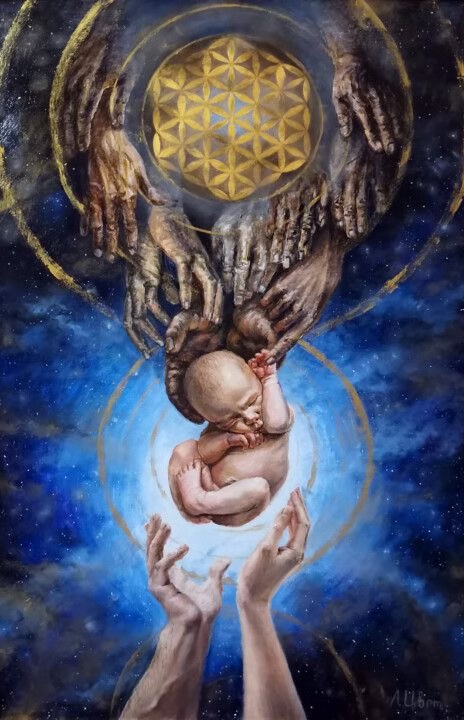
Art by Anastasiia Tsvetkova
Hypothesis: COEX Systems and Breaking the Compromised Template
The concept of COEX systems—short for “systems of condensed experience” (as coined by Stanislav Grof)—can be applied to understand how attachment injuries in both males and females create layers of experiential patterns that repeat across their lives. These COEX systems, formed by unresolved emotional and relational experiences in early development, govern behaviors, perceptions, and relational dynamics until the individual consciously works to break the compromised template.
Below is a hypothesis for how these COEX systems manifest and perpetuate in males and females distinctly from an attachment standpoint and how breaking these systems facilitates the individuation process.
The Formation of COEX Systems
For Females: The Matrical Void COEX System
• Core Experience: The absence of the “matrical gaze” creates a deep sense of disconnection from the self. This unmet need for unconditional validation forms the core emotional wound, or the first layer of the COEX system.
• Condensed Layers: Over time, subsequent experiences—such as rejection by peers, competition with other women, or invalidation in relationships—reinforce this core wound. These layers echo the original void, perpetuating patterns of mistrust and compromised self-worth.
• Repetition Mechanism: The COEX system drives behaviors and relational patterns where the INDIVIDUAL UNCONSCIOUSLY SEEKS TO RECREATE THE ORIGINAL WOUND, either by engaging in toxic relationships, mistrusting other women, or overcompensating through control and perfectionism.
For Males: The Enmeshed COEX System
• Core Experience: Early enmeshment with a maternal figure creates an unresolved attachment-conflict COEX. The male child is psychologically recruited to meet the mother’s unmet needs, resulting in a fractured sense of autonomy.
• Condensed Layers: Later experiences, such as relationships with demanding or emotionally unavailable partners, reinforce this dynamic. The male oscillates between the need for merging (seeking approval) and the desire for separation (fleeing perceived control), creating a cycle of inner conflict.
• Repetition Mechanism: This COEX system repeats in patterns of codependency, failed boundaries, and relational dysfunction. The male either externalizes his attachment injury (becoming domineering) or internalizes it (falling into self-destructive patterns).
How COEX Systems Perpetuate:
• Projection: Individuals project unresolved wounds onto relationships, recreating the dynamics of early attachment injuries.
• Reinforcement: Each failed relational or emotional pattern reinforces the original wound, deepening the layers of the COEX system.
• Avoidance of Discomfort: The individual unconsciously avoids the core pain of their template by externalizing blame or falling into familiar, albeit toxic, patterns.
Both male and female COEX systems create self-reinforcing cycles of relational dysfunction, emotional pain, and stunted individuation until a conscious effort is made to address and resolve the root experiences.
Breaking the COEX System: Individuation and Liberation
For Females: The Matrical Void
• Awareness of the Core Wound: The first step is recognizing the absence of the matricral gaze and how it manifests in toxic relational patterns.
• Facing the Void: This involves confronting the inner world – fear of abandonment, self-doubt, self-sabotage, control, manipulation, and the longing for validation.
• Integrating Fragmented Sense of Self: By reclaiming self-worth and developing deep connection and empathy for oneself, cultivating capacity to shift competition to collaboration and authenticity.
• Individuation Outcome: The female moves beyond her COEX system into a state of self-agency, where she can form healthy relationships, embrace her gifts, and trust her own inner compass.
For Males: Breaking the Enmeshment
• Awareness of Enmeshment: THE MALE MUST RECOGNIZE HIS “MOTHER CONTRACT” in the maternal dynamic and how this role has shaped his relationships and sense of self.
• Deliberate Separation: This involves symbolically and emotionally separating from the maternal shadow, breaking free from codependent patterns – involves rites or passages and ritualized separation processes.
• Integration of Masculine Autonomy: The male learns to balance his desire for merging with his need for independence. This involves cultivating emotional regulation, healthy boundaries, and a sense of self beyond relational dynamics.
• Individuation Outcome: The male emerges as an integrated individual, no longer torn between attachment and autonomy. He gains the freedom to form authentic relationships and live from a place of inner sovereignty.
When COEX Systems Interact: Toxic Relational Patterns
When unresolved COEX systems in males and females interact, they can create toxic relational entanglements.
• Female Matrical Void + Immasculated Male: The female’s mistrust and need for validation may trigger the male’s desire for merging or his tendency to dominate, perpetuating cycles of codependency or conflict.
• Externalized vs. Internalized Patterns: Type A males (externally destructive) may exploit the female’s wounds, reinforcing her mistrust. Type B males (internally destructive) may mirror her sense of inadequacy, deepening her relational despair.
Breaking these patterns requires both individuals to confront their COEX systems, enabling healthier dynamics rooted in mutual respect and self-awareness.
Toward a Collective Liberation
COEX systems do not just operate on an individual level; they also underpin societal structures, such as toxic patriarchy and wounded sisterhood dynamics.
Healing these systems requires individual and community-level work, creating spaces for both men and women to confront their core wounds, separate from their inherited templates, and rebuild healthier patterns – restoring balance within individuals and society by integrating both the nurturing feminine and the autonomous masculine energies.
Conclusion: Compromised template often perpetuate extremes—either clinging to or avoiding others. Healing involves integrating these polarities, allowing for authentic and secure relationships. Until individuals break free from their COEX systems (interwoven with early attachment ruptures reflecting fragmented and conflicting experiences—profound longing for connection coexisting with terror of vulnerability they remain trapped in the repetition of compromised templates, unable to fully individuate.
From an attachment standpoint, Coex systems encapsulate the emotional and relational imprints of early life, shaping how individuals relate to themselves and others. By addressing these systems through therapeutic processes within a healthy relational container allows for corrective emotional experiences and potentially transform entrenched attachment patterns and foster relational and self-awareness.
Invitation for Dialogue:
This is a work-in-progress hypothesis, one that will continue to evolve and expand over time. My hope is to inspire an open-minded discussions on transformative power of breaking old patterns.
Drop your thoughts, feedback, or questions in the comments. Let’s hold this space together and explore these ideas with curiosity, compassion, and the courage to reimagine what healing might look like.
Love and Courage
 Innereset